
What a Landscaper Actually Does (And Why It Matters More Than You Think) in Fort Worth, TX
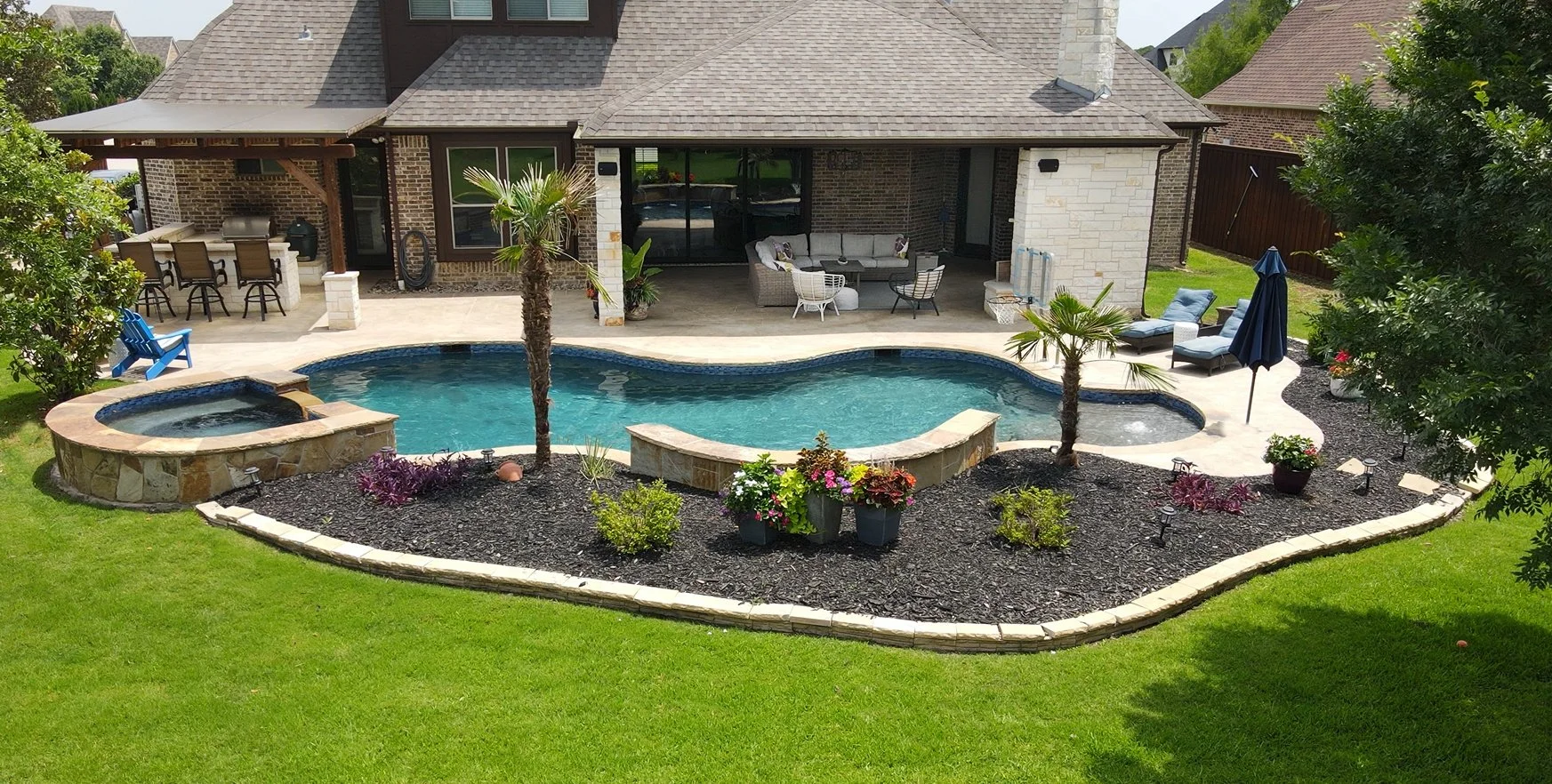
Most people use the word landscaper the same way they use the word contractor. Broadly. Loosely. As a catch-all for anyone who does work outside.
And that is part of the problem.
Because hiring a landscaper in North Texas can mean a dozen different things depending on who picks up the phone. It could mean a crew that mows and edges. It could mean someone who installs sod and mulch. Or it could mean a design build professional who takes a backyard from a blank slate to a fully realized outdoor living space, complete with structure, hardscape, lighting, and every detail in between.
The gap between those definitions is enormous. And it is the reason some homeowners end up with a backyard they love, and others end up with a yard that looks fine but never quite works the way they imagined.
Related: Why Your Yard May Not Be Working for You Without a Landscaper in Grapevine and Euless, TX
The Word Landscaper Covers a Lot of Ground
In the Fort Worth area, the outdoor living market has evolved significantly over the past decade. What used to be a patio and some foundation plantings has become something closer to a second living room. Homeowners in Southlake, Keller, Aledo, Arlington, and across Tarrant County are building pavilions, outdoor kitchens, fire features, pools, and custom hardscape environments that function as true extensions of the house.
That shift has changed what the word landscaper needs to mean.
A mow and blow crew handles maintenance. A nursery delivers plants. A concrete company pours flatwork. But a landscaper who designs and builds outdoor living spaces is doing something fundamentally different. They are taking a vision, a set of site conditions, a budget, and a lifestyle, and turning all of it into a physical space that the family will use every day.
That requires a different skill set. A different process. And a different conversation from the very beginning.
Why the Design Conversation Changes Everything
The most common mistake homeowners make when starting an outdoor project is skipping the design phase. They know they want a patio. They know they want a grill. Maybe they have seen something on a neighbor's property or in a magazine and want something similar. So they call a landscaper, describe what they want, and ask for a price.
The problem is that a price without a design is a guess. And a project without a design is a series of individual decisions that may or may not work together when they are all in the ground.
A design process does something different. It starts with the property itself. Where does the sun hit in the afternoon? Where does the wind come from? What is the grade doing? Where are the utilities? How does the family move between the house and the yard, and what do they actually want to do when they get outside?
These questions lead to a plan. And the plan leads to decisions that are connected to each other rather than made in isolation:
The patio is sized and oriented based on how the family uses the space, not just the available square footage
The outdoor kitchen is positioned for airflow and convenience, with utilities routed during construction instead of retrofitted later
The pavilion or pergola is placed where it provides shade at the right time of day and frames the view from inside the house
The fire feature is located where it draws people in during cooler months without creating smoke issues for the seating area
The walkways connect spaces in a way that feels natural instead of forced
The lighting is layered so the entire space is usable and inviting after dark
When a landscaper approaches a project through design first, the result is a backyard that reads as one environment. Everything connects. Everything flows. And the homeowner does not end up with a collection of features that were added one at a time without a plan.
What North Texas Weather Demands From an Outdoor Space
Fort Worth sits in a climate that does not go easy on anything built outside. Summers are long, hot, and direct. The UV exposure is relentless from May through September. Afternoon temperatures regularly push past 100 degrees, and the radiant heat off concrete and stone can make an uncovered patio unusable by midday.
Then there is the other end of the spectrum. Winter in North Texas is mild compared to the Midwest, but it is not without its challenges. Ice storms hit without much warning. Freeze thaw cycles can crack poorly prepared hardscape. And the wind, which most people do not think about until they are sitting in an open backyard with nothing to block it, is a year-round factor.
A landscaper who builds outdoor living spaces in this region needs to account for all of it. That means selecting materials that handle thermal expansion and UV exposure without cracking, fading, or becoming dangerously hot underfoot. It means designing shade structures that are not optional but essential. It means grading and drainage planning that accounts for the heavy, fast rainstorms that dump inches of water in less than an hour during spring and summer. And it means building with the understanding that the space needs to perform from February through November, not just during the six weeks of perfect weather.
These are not details that get figured out after the patio is poured. They are decisions that shape the design from the beginning.
What Is Happening Underground Matters Just as Much
In North Texas, the soil tells a story that most homeowners do not hear until something goes wrong. The heavy clay soils that dominate Tarrant County and the surrounding areas expand when they are wet and contract when they are dry. That movement is significant. It can shift a patio, crack a retaining wall, and cause a pool deck to heave if the base preparation does not account for it.
A landscaper who has built in this region long enough understands the soil. They know that base preparation for hardscape needs to go deeper and use more compacted aggregate than it would in areas with stable, sandy soil. They know that drainage cannot be an afterthought because the clay does not absorb water quickly, and when a heavy rain hits, the water has to go somewhere. If that somewhere is pooling on the patio or running toward the foundation, the design failed before the first stone was set.
They also know that the expansive soil affects the root zones of trees and plantings differently than it does in other parts of the country. Plant selections need to account for the clay, the alkaline pH that is common across the region, and the reality that summer drought and spring flooding can happen on the same property in the same year.
This is local knowledge. It does not come from a textbook or a supplier catalog. It comes from building in this dirt, year after year, and understanding what works and what does not.
Schedule a consultation with Hillman Outdoor Living and see what your Fort Worth backyard could become.
The Difference Between a Feature and a Space
One of the clearest signs that a project was built without a cohesive plan is when the backyard feels like a showroom floor. There is a fire pit here. A grill station there. A pergola off to the side. Each feature looks good on its own. But none of them relate to each other. The transitions are awkward. The flow is not intuitive. And the family ends up gravitating toward one area and ignoring the rest.
A landscaper who thinks in terms of space rather than features avoids this entirely. The fire pit is not a standalone item. It is part of a seating area that connects to the patio, which connects to the kitchen, which sits under the pavilion, which frames the view of the pool. Each zone has a purpose. Each transition is intentional. And the backyard functions the way a well-designed house does, where every room has a role and every hallway leads somewhere worth going.
This is what 3D design enables. When the homeowner can see the space before it is built, they can understand the relationships between the elements, adjust the layout, and make decisions with confidence instead of guessing. And when the builder is working from a detailed plan, the execution matches the vision.
What to Look for Before You Hire
Not every landscaper in the Fort Worth area operates the same way. Some are focused on maintenance. Some handle basic installations. Some specialize in one element, like pools or concrete, and subcontract everything else. And some are design build firms that handle the entire process in house, from the initial site visit through the final walkthrough.
If you are planning a project that involves multiple outdoor living elements, a few things are worth evaluating before you commit:
Does the company start with a design process, or do they jump straight to a bid? A bid without a plan means decisions are being made on the fly, which leads to change orders, delays, and results that do not match expectations.
Does the company build in house, or do they subcontract the work? When the same team that designed the space is the team that builds it, the communication is tighter and the accountability is clearer.
Does the company have experience with the specific elements you want? A landscaper who builds excellent patios may not have the expertise to build a pool, an outdoor kitchen, or a structural pavilion. The more of your project a single company can handle, the more cohesive the result.
Can they show you completed work that looks like what you are envisioning? Portfolio photos are the fastest way to understand a company's quality, style, and range.
These are practical questions. They are not about choosing the cheapest option or the most expensive one. They are about finding the right fit for the project you have in mind.
The Backyard You Build Is the One You Will Live In
A backyard project is not like a kitchen renovation or a bathroom remodel. You do not close a door and walk away from it. It is right there, every time you look out the window, every time you step outside, every time someone comes over.
The right landscaper understands that. They understand that the space needs to work on a Tuesday evening the same way it works during a Saturday gathering. It needs to handle the heat, the rain, the wind, and the wear that comes with being used the way it was designed to be used. And it needs to look like it belongs on the property, not like it was assembled from a catalog.
That standard is not about perfection. It is about intention. It is about a process that starts with listening, moves through design, and ends with a build that matches what the homeowner saw in their head before the first footing was poured. It is about a team that shows up, communicates clearly, solves problems on site instead of passing them along, and takes ownership of the finished product.
In Fort Worth, Southlake, Keller, Aledo, Arlington, and the communities across this part of Texas, where outdoor living is not a trend but a way of life, that standard matters. The homes are built well. The properties deserve the same attention outside as they get inside. And the families who live in them deserve an outdoor space that delivers on what it promised.
If your backyard has been sitting there waiting for a plan, or if you have been thinking about what it could become but have not known where to start, the first step is usually simpler than you think. Walk outside. Look at the space. Think about how you want to use it. And then have a conversation with someone who builds these spaces for a living.
That is where the good projects start. Not with a product. Not with a price. With a conversation about what the space could be. That conversation can start today. Hillman Outdoor Living designs and builds complete outdoor living spaces for homeowners across Fort Worth and the surrounding communities, and it all starts with a site visit.
About the Author
Michael Hillman started Hillman Outdoor Living as a high schooler over two decades ago. His entrepreneurial spirit led him to mow lawns for extra cash, which he did throughout college. After college graduation, Hillman transitioned his business into a commercial property management company and pivoted again when he began offering primarily landscape design and build services. Today, Hillman operates with a team of dedicated and talented professionals providing exceptional service.