
Why So Many Fort Worth, TX, Backyards Need a Retaining Wall Before Anything Else
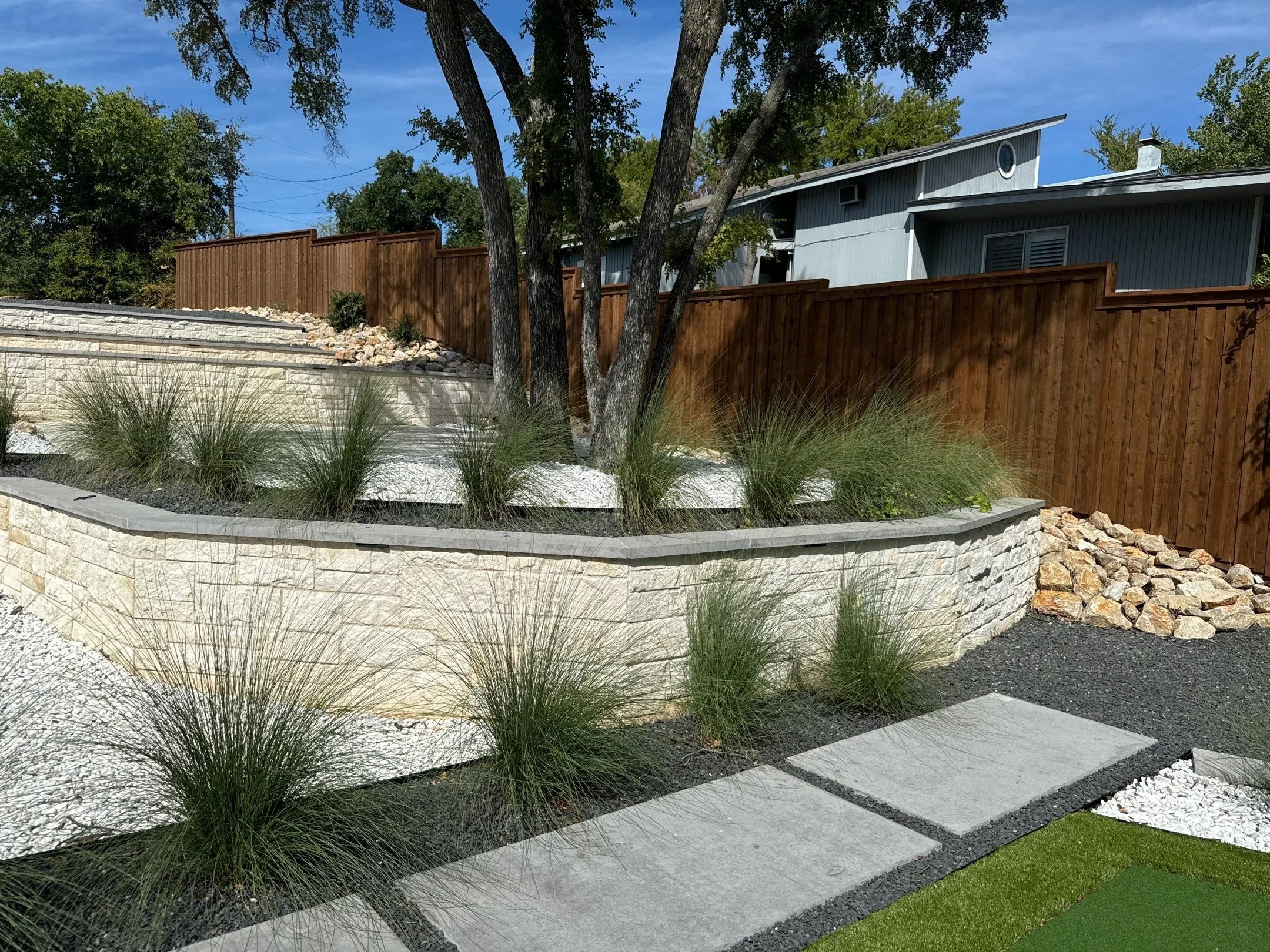
North Texas backyards are not flat. They slope, they terrace, they shift, and they drain in ways that can work against every other outdoor living investment a homeowner makes. Before the patio gets placed, before the pool gets designed, before the pergola footings go in, the grade of the yard determines what is possible and what will hold up over time.
A retaining wall is often the first structural decision that makes everything else work. It is not a decorative feature added at the end of a project. It is the element that levels a site, controls erosion, manages drainage, and defines the outdoor living zones that everything else gets built around.
Homeowners in Fort Worth, Aledo, Keller, Southlake, and across the DFW area who skip this step often find themselves adding it later, at greater expense, after the yard has already revealed what the soil and grade were going to do.
Hillman Outdoor Living designs and builds retaining walls as part of complete outdoor living environments. Understanding why they matter and when they are needed is the first step toward a backyard that performs the way it was designed to.
Related: Design a Beautiful Retaining Wall for Hosting Cozy Gatherings in Aledo, TXOct 30, 2024
Why Do So Many Backyards in Fort Worth, TX, Need a Retaining Wall?
The short answer is soil and grade. North Texas sits on expansive clay soil that swells when wet and shrinks when dry. The movement is significant, and it affects every structure, surface, and planted area in the yard. Combined with the elevation changes that characterize a large portion of residential lots in the DFW area, that soil behavior creates conditions where an unretained slope will erode, shift, and undermine anything built near it.
The Soil Problem
Fort Worth area clay soil is among the most expansive in the country. It absorbs water rapidly after rain and releases it slowly, creating dramatic movement cycles that push against foundations, crack concrete flatwork, and shift planting beds. An unretained slope amplifies this behavior because there is nothing holding the soil mass in place as it contracts and expands seasonally.
A retaining wall provides the lateral resistance that clay soil requires. It holds the slope in position through the seasonal movement cycles, protects the flatwork and structures at the base of the slope, and gives the surrounding landscape a stable platform to build from.
The Grade Problem
Residential lots in Fort Worth and surrounding communities were graded during development primarily for drainage, not for outdoor living use.
Many homeowners inherit yards with elevation changes of several feet across the usable backyard area. Those changes make the space difficult to furnish, impossible to level a pool deck against, and awkward to navigate without defined transitions.
Retaining walls create level terraces from sloped ground. A yard that was unusable because of a five-foot grade change becomes a multi-level outdoor living environment with defined zones for dining, lounging, cooking, and water features. The wall does not fight the slope. It organizes it.
The Drainage Problem
Slope and drainage are connected. Water moves downhill, and in a yard without proper grade management, it moves toward the house, toward the patio, toward the pool equipment, and toward the planting areas where it causes the most damage.
North Texas rainfall, while unpredictable, arrives in heavy bursts that overwhelm poorly graded surfaces quickly.
Retaining walls built with proper drainage infrastructure redirect water away from structures and through controlled channels. French drains, weep holes, and gravel backfill behind a properly constructed wall manage hydrostatic pressure and keep water moving in the right direction.
What Are the Different Types of Retaining Walls Used in Outdoor Living Spaces?
Not every retaining wall serves the same purpose or suits every yard. The material, construction method, and structural requirements vary significantly based on the height of the wall, the soil conditions, the load it will carry, and how it relates to the surrounding outdoor living features.
Concrete Block and Segmental Retaining Walls
Segmental retaining walls use interlocking concrete block units to create a structurally engineered wall that manages significant grade changes. They are the standard for walls above two to three feet in height and are designed to handle the lateral soil pressure that comes with retaining large volumes of earth. In Fort Worth yards with five or more feet of grade change, segmental walls provide the structural capacity that decorative options cannot.
These walls are designed with batter, meaning they lean slightly back into the hillside, which improves stability and distributes the soil load more effectively. Geogrid reinforcement is often installed in the soil behind the wall at regular vertical intervals to extend the wall's holding capacity deep into the slope.
Natural Stone Retaining Walls
Natural stone walls bring visual weight and texture that integrates naturally into landscape plantings and garden areas. They are well-suited to lower retaining applications, seating walls that double as retaining elements, and situations where the design calls for a more organic, less engineered appearance.
In Fort Worth's expansive clay environment, natural stone walls require careful attention to drainage and footing depth. Without proper construction, the same soil movement that makes retaining walls necessary will shift and topple a stone wall within a few seasons.
When built correctly, with adequate footing, backfill drainage, and proper cap installation, natural stone walls are durable and visually distinctive elements in any outdoor living design.
Poured Concrete and Concrete Block Walls
Poured concrete retaining walls offer the highest structural capacity and are appropriate for walls that carry heavy loads, support elevated pool decks, or sit adjacent to existing structures where movement tolerance is minimal.
They are less common in residential landscape applications but are specified when the engineering demands exceed what segmental or natural stone walls can deliver.
Concrete block walls provide a middle ground, offering more design flexibility than poured concrete while still delivering structural integrity that segmental retaining walls cannot match in every application.
They are often used at pool equipment areas, under elevated decks, and along property lines where structural performance is the primary concern.
How Does a Retaining Wall Work With Other Outdoor Living Features?
A retaining wall does not exist in isolation. In a well-designed outdoor living space, it is the structural foundation that other elements are built around, attached to, or positioned against. Understanding how the wall relates to the patio, the pool, the outdoor kitchen, and the planted areas is part of what distinguishes a designed outdoor living space from a collection of features that happen to share a yard.
Retaining Walls and Patios
A patio built at the base of an unretained slope will heave, crack, and settle as the slope shifts seasonally. The wall stabilizes the soil mass above the patio, giving it a stable subgrade to rest against. The wall cap also establishes the finished grade elevation that the patio surface ties into, which is why wall and patio design happen together, not sequentially.
Hillman Outdoor Living designs retaining walls and patios as integrated systems. The wall height, cap material, and finished face are selected to complement the patio surface and the broader design language of the outdoor space.
A limestone cap wall reads differently against a flagstone patio than against a concrete paver surface, and those decisions happen at the design stage rather than on-site.
Retaining Walls and Pools
An inground pool installed on or near a sloped site without proper retaining and drainage infrastructure is a long-term maintenance problem waiting to develop.
Soil movement adjacent to a pool shell creates pressure against the shell walls, can shift the coping, and disrupts the surrounding deck surface. Pool equipment pads located downhill from a slope are particularly vulnerable to erosion and water intrusion.
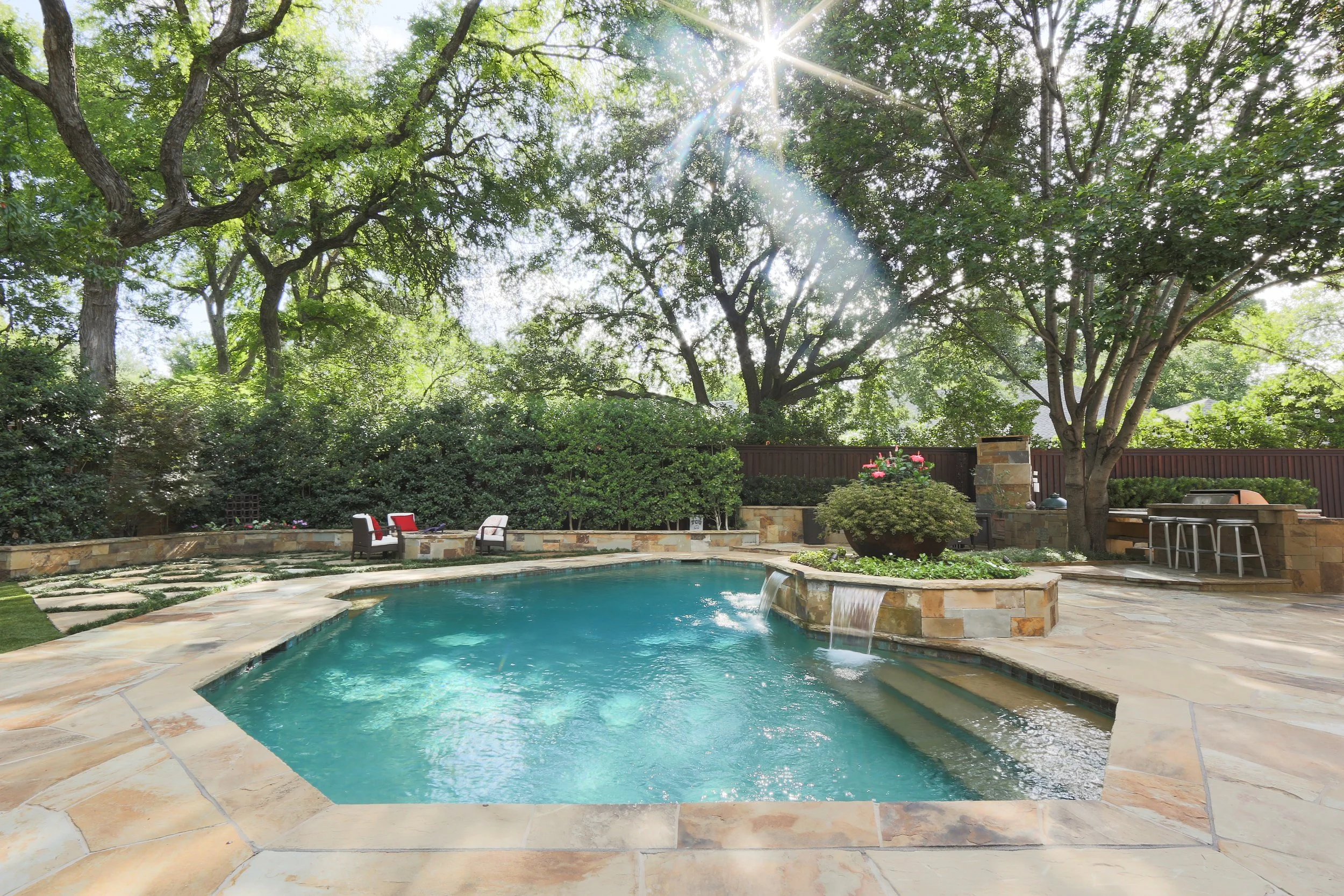
Retaining walls around pool installations protect the pool structure, level the surrounding deck area, and create defined zones for pool equipment that are properly drained and graded away from the pool shell. They also create a visual enclosure that makes a poolscape feel like a destination rather than a hole in the ground.
Retaining Walls as Seating Walls
Many retaining walls in Hillman's outdoor living projects serve a dual function as seating walls. A wall built to 18 to 22 inches in height, capped with a smooth, comfortable material, becomes informal seating that expands the gathering capacity of a patio without adding furniture.
This is particularly effective around fire features, where seating walls create a permanent, fireproof perimeter that defines the gathering zone.
The structural requirements of a seating wall are different from a taller retaining application, but the design integration is the same. Cap material, wall face, and the relationship to surrounding paving are all considered together to produce a wall that functions well and reads as a deliberate design element.
Related: Four Custom Retaining Wall Designs for Your Keller or Burleson, TX Property
What Should Homeowners Know About Retaining Wall Construction in North Texas?
Building a retaining wall in North Texas requires more than stacking materials. The soil conditions, clay expansion rates, drainage requirements, and local building codes all influence how a wall needs to be engineered to perform over time. A wall that looks finished and correct on the day of installation will reveal its construction quality over the first two or three seasons.
Footing Depth and Preparation
Every retaining wall needs a footing that goes below the active soil zone. In North Texas, where clay movement extends several feet below grade, this means digging deeper than many homeowners expect.
A shallow footing in expansive clay will shift, which translates directly to leaning, cracking, or toppling of the wall above it. The footing preparation stage is not visible in the finished project, but it determines whether the wall holds its position for decades or requires rebuilding within a few years.
Drainage Behind the Wall
Hydrostatic pressure is the primary cause of retaining wall failure. When water accumulates behind a wall and cannot escape, the pressure it exerts against the wall face exceeds the wall's lateral resistance and the wall moves.
Proper drainage installation, including gravel backfill and weep holes or perforated pipe at the wall's base, allows water to move through and relieve that pressure continuously.
Permits and Engineering
Retaining walls above a certain height require permits in most Fort Worth area municipalities. The specific height threshold varies by jurisdiction, but walls over four feet typically require a permit and engineered drawings.
Working with a contractor who pulls the appropriate permits and follows the engineering specifications protects the homeowner and ensures the wall is inspected and documented correctly.
How Does Hillman Outdoor Living Approach Retaining Wall Projects?
Hillman Outdoor Living approaches every retaining wall project as part of a complete outdoor living design. The wall is not designed in isolation or added to a plan as a correction. It is part of the site analysis that determines where level areas are possible, how drainage will be managed, and how the outdoor living zones will relate to each other.
3D Design and Site Analysis
Hillman uses 3D design technology to show homeowners exactly how a retaining wall and the surrounding outdoor features will look and function before construction begins.
Grade changes, wall heights, cap materials, and the relationship to the patio and pool are all visible in the design presentation, which means homeowners approve the full picture rather than making decisions piecemeal on the job site.
The site analysis that precedes the design identifies drainage patterns, soil conditions, utility locations, and the structural requirements for any wall on the property. This information shapes the design rather than creating surprises during construction.
Material Selection for DFW Conditions
Hillman selects retaining wall materials with North Texas's climate and soil conditions in mind. Materials that perform well in moderate climates may not hold up to the expansion and contraction cycles that DFW clay puts them through.
Every material specification reflects both the aesthetic goals of the project and the performance demands of the site.
Integration With the Complete Outdoor Living Environment
Every retaining wall Hillman builds is designed to work with the patio, pool, outdoor kitchen, fire feature, and planted areas that surround it. The wall is not a structural afterthought. It is the element that makes the rest of the design possible, and it is treated that way from the first conversation through the final walkthrough.
Contact Hillman Outdoor Living today to start planning a retaining wall and outdoor living space that works for your Fort Worth, TX, property.
Related: Create a Beautiful Backdrop for Family Gatherings With a Custom Retaining Wall in Arlington, TX
About the Author
Michael Hillman started Hillman Outdoor Living as a high schooler over two decades ago. His entrepreneurial spirit led him to mow lawns for extra cash, which he did throughout college. After college graduation, Hillman transitioned his business into a commercial property management company and pivoted again when he began offering primarily landscape design and build services. Today, Hillman operates with a team of dedicated and talented professionals providing exceptional service.