
How to Judge a Retaining Wall Contractor in Fort Worth, TX, on the Half You Cannot See
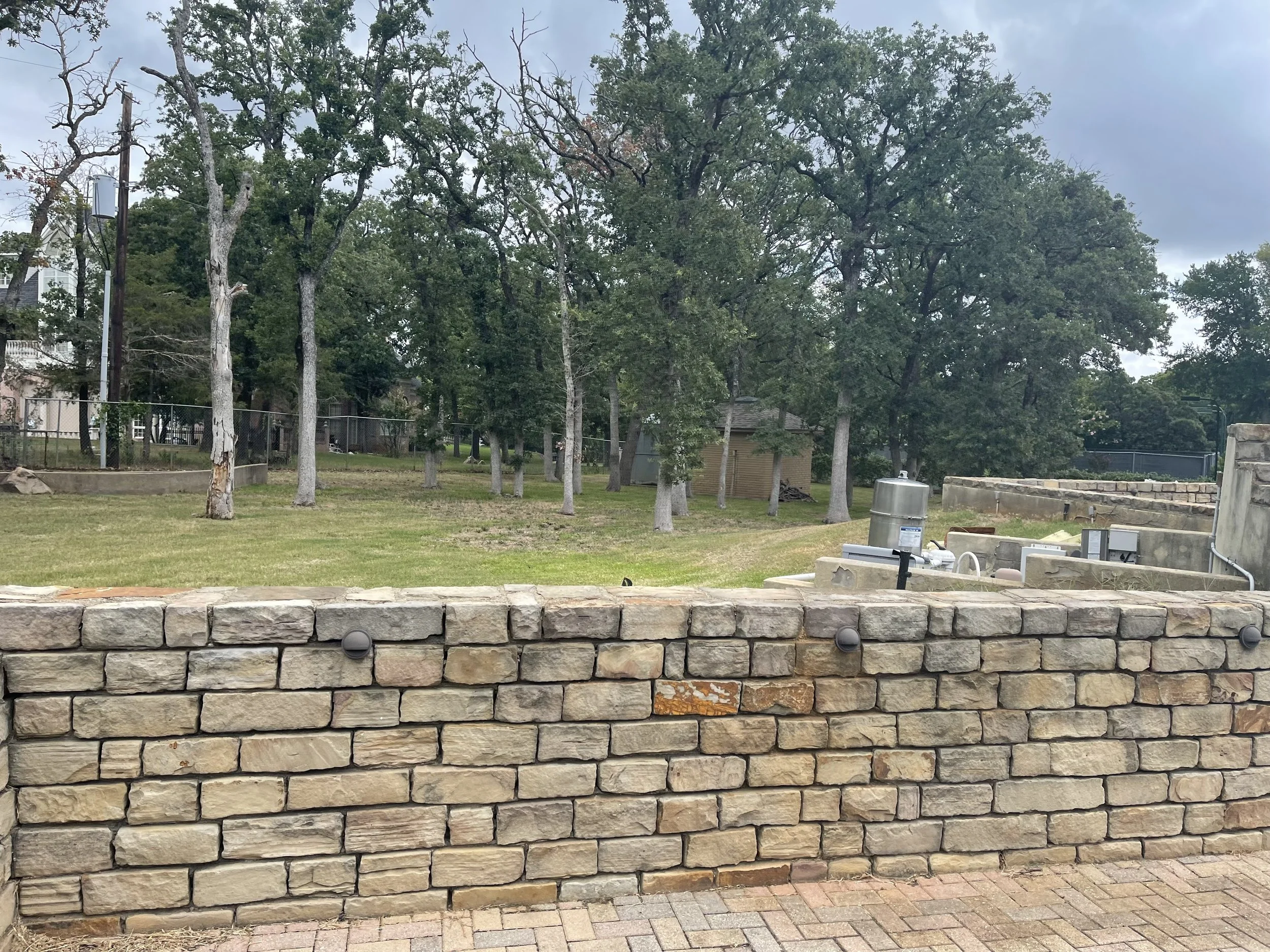
Choosing a retaining wall contractor in Fort Worth, TX, comes down to the part of the work that is buried before you ever see the finished wall.
Two walls can be faced in the same stone, built to the same height and look identical on the day they are handed over. One of them will still be straight in twenty years while the other starts to lean in its third winter.
Hillman Outdoor Living has been building across Fort Worth for over two decades, and that much time on North Texas ground is mostly a record of what the clay does to work that was rushed. North Texas clay swells when it takes water and shrinks when it dries, and it does both several times a year.
A wall here is holding ground that moves, which means the specification behind the face matters more than the face does, and this guide covers how to read that specification before you sign anything.
Related: Why So Many Fort Worth, TX, Backyards Need a Retaining Wall Before Anything Else
What Makes a Retaining Wall a Structure Rather Than a Garden Feature?
A retaining wall becomes a structure rather than a garden feature when it holds back soil. A low border wall around a bed carries its own weight and little else.
A wall holding back three or four feet of saturated clay is resisting lateral earth pressure that increases with depth and multiplies when the soil behind it is wet, and it may also be carrying a surcharge from a driveway, a patio or a structure sitting on the ground above.
That distinction changes everything about how the wall is built: the depth and preparation of the base, the presence of reinforcement through the backfill, the drainage provision and whether an engineer signs the design. Any contractor pricing both kinds of wall the same way is not distinguishing between them, and that is worth noticing early.
On most Fort Worth properties the honest answer is that the yard contains both kinds. Our retaining and seating walls work covers the structural runs that hold a grade change and the low seat walls that shape a space, and the proposal should make clear which is which.
Why Is Drainage the Part That Decides Whether a Retaining Wall Stands?
Drainage decides whether a retaining wall stands because the water behind the wall is the load it has to resist.
Dry soil behind a wall exerts a predictable pressure, while the same soil saturated after a heavy North Texas storm exerts substantially more, and clay adds swelling pressure on top of that. A wall designed for the dry condition and built without a way to shed water is being asked to do something it was not sized for.
The standard drainage detail has four parts. A zone of clean angular stone sits immediately behind the wall, a perforated pipe at the base of that zone is laid to a fall, a geotextile separates the stone from the surrounding soil so fines do not migrate in and clog it, and an outlet daylights somewhere the water can actually go. Each of those four elements fails differently if it is left out.
The outlet is the one most often skipped, because it is the least visible. A drain line that runs to a buried dead end collects water rather than removing it. Ask specifically where the pipe discharges, then find that point on the plan.
When Does a Retaining Wall in Fort Worth Need an Engineer?
A retaining wall in Fort Worth needs an engineer when it exceeds the local height threshold, carries a surcharge, sits on or near a slope, loads another wall in a terraced scheme or stands on soil with questionable bearing capacity. Height is the usual trigger, and the threshold is set by the local authority rather than by the contractor. A driveway, a pool deck or a structure above the wall all count as surcharges.
A contractor who tells you that engineering is unnecessary on a tall wall is making a decision that is not theirs to make. A contractor who names the threshold, says which side of it your wall falls on and includes the engineering in the scope where it is needed is telling you how they work.
Permitting follows the same logic. Knowing which walls in your city need a permit, and building that time into the schedule, is part of the service rather than an obstacle the homeowner discovers later.
What Does Geogrid Do, and When Should It Be in a Retaining Wall Quote?
Geogrid is a reinforcement material laid in horizontal layers into the backfill and locked between the wall units, and it belongs in the quote whenever the wall height and loads call for it. It turns the wall and a wedge of the soil behind it into a single mass, so the structure resisting the earth pressure is far larger and heavier than the facing units on their own.
Whether your wall needs it, at what vertical spacing and how far back each layer has to extend are engineering questions rather than preferences. What matters for a homeowner reading two bids is that geogrid is expensive in both material and excavation, so a bid that includes it and a bid that does not are not quoting the same wall.
The same is true of the base. A compacted aggregate base placed below the level of disturbed soil, built in controlled lifts and checked for level, is the foundation the whole run sits on. Skimping there shows up as a wavy top course long before the wall does anything dramatic.
How Do North Texas Soils Change Retaining Wall Design?
North Texas soils change retaining wall design because the expansive clay across much of Tarrant County holds water, changes volume seasonally and works against anything rigid built on or into it.
The practical responses are to get clean draining material behind the wall rather than backfilling with the excavated clay, to build the base below the active zone and to prefer systems that tolerate small movements over ones that crack.
Site drainage matters at the same time. A wall at the bottom of a slope is receiving every storm that falls above it, and intercepting that water before it reaches the backfill with a swale or a subsurface line takes load off the structure permanently. That interception is cheap while the ground is open and awkward afterward.
Trees are the third local factor. Large trees draw substantial moisture out of clay in summer, which changes how the ground behaves near them, and their roots will find a new drainage line. Deciding what stays and what goes is part of the wall design rather than a separate conversation.
What Materials Suit a Retaining Wall on a Fort Worth Property?
Engineered segmental block, natural stone, poured concrete or block with stone veneer, and boulders can all suit a Fort Worth property, provided the structure behind them is right.
Segmental block is the workhorse for structural walls because it is designed as a system with matching geogrid, it tolerates minor movement and it can be curved and stepped without special units. Natural stone, including the local limestone that reads well against Texas architecture, suits both structural and feature applications and can be laid dry-stacked or mortared.
Poured concrete and masonry block with a stone veneer give the crispest lines and the most formal result, and they are the least forgiving of ground movement, so they depend most on the base and the drainage being right. Boulders suit naturalistic settings and larger grade changes where the look suits the property.
Material is genuinely a choice, and structure is not. Any of those systems can be built to last on a Fort Worth lot, and any of them will fail on a poor base with nowhere for water to go.
How Should a Retaining Wall Relate to the Rest of the Yard?
A retaining wall should be designed around what the usable ground it creates is for, with the wall height, terrace level, stair and terrace width resolved together.
The height of the wall sets the level of the terrace above it, the terrace level sets the number of risers in the stair that reaches it, and the width of the terrace decides whether furniture actually fits. Those numbers should be settled on a plan before anyone orders block.
Sequencing follows from that. Conduit for lighting, sleeves for irrigation, gas for a fire feature and drainage for the patio above all belong in the ground during the wall build, because retrofitting them means cutting through finished work.
Seat walls, steps and planters then finish the space. Built in the same material family as the structural run, they make the grade change read as a designed terrace rather than as an engineering solution someone had to accept.
Related: Create a Beautiful Backdrop for Family Gatherings With a Custom Retaining Wall in Arlington, TX

What Questions Separate One Retaining Wall Contractor From Another?
The questions that separate one retaining wall contractor from another all concern the buried half: the base, the backfill, the drainage, the reinforcement, the engineering and the spoil. Ask how deep the base goes and what it is built from, what material is going behind the wall and how far back, and where the drain outlets.
Ask whether geogrid is in the scope and at what spacing, whether an engineer is involved and who pays for them, and what happens to the excavated clay.
The answers matter less than the manner of them. A contractor who has those numbers ready has built walls that lasted, while one who answers in generalities about quality and experience has usually been selling the face. You are hiring for the half nobody sees.
It is also fair to ask to see a wall they built five or more years ago rather than a photograph taken on handover day. Time is the only real test of this work, and a contractor with walls still standing straight will be glad to show you.
What Should a Retaining Wall Proposal Say About Access and Site Protection?
A retaining wall proposal should name the access route, the protection for driveways and turf and the plan for excavated spoil.
Wall building moves a lot of material in both directions: excavated clay has to leave, while base stone, block and drainage stone have to arrive, and on most residential lots all of that travels through a side gate or across a lawn. A proposal that covers those points was written by someone who has thought about your property rather than just the wall.
Access also shapes the schedule and sometimes the method. A rear yard reachable only through a narrow gap limits the machinery, which means more hand work and a longer schedule. Establishing that on the first visit avoids a renegotiation in week two.
How Long Does a Retaining Wall Take to Build?
A straightforward retaining wall run takes days once the material is on site, while a terraced scheme with geogrid, a designed drainage network and a stair run takes several weeks. The simple case assumes good access, no engineering and modest height. On larger schemes the split is roughly two thirds groundwork and one third laying units, so the visible part is the fast part.
Weather governs the rest. Saturated clay cannot be compacted, because compacting wet material produces a base that dries into voids, and a wet week in North Texas stops base work entirely. Crews that push through those conditions to hold a date produce walls that show it in year three, so a schedule with weather contingency in it is a sign of experience rather than of slowness.
The other schedule input is the order in which the yard gets built. Where a wall, a patio, a pool or a structure are all in the plan, the wall usually comes first because everything else sits on the ground it creates. Sequencing that correctly saves more time than rushing any individual trade.
Hiring a Retaining Wall Contractor in Fort Worth, TX
If a grade change is holding up the rest of your plans, the productive first step is a site visit that measures the fall, reads where water travels and looks honestly at the soil, rather than a quote written from a photograph.
Our team will tell you which parts of the job are structural, where an engineer belongs and what the buried half of the work actually involves.
Hillman Outdoor Living designs and builds retaining and seating walls across Fort Worth and the surrounding communities. Contact Hillman Outdoor Living to schedule a retaining wall site visit.
In Summary
How long should a properly built retaining wall last in Fort Worth?
A properly built retaining wall in Fort Worth should last decades, and the variable is almost entirely what sits behind it rather than what you can see. A wall with a compacted base below the disturbed soil, clean free-draining backfill, a working drain with a real outlet and reinforcement where the height calls for it will outlive the furniture on the terrace above it. A wall built without those things often starts leaning inside five years.
Can a retaining wall be built in stages across two seasons?
A single retaining wall should be built in one go, because the base, the drainage and the backfill are continuous and a cold joint mid-run creates a weak point. A terraced scheme of several separate walls can be staged, provided the whole scheme is designed first so the lower wall is built to carry the surcharge of the upper one. Designing as you go is how the second phase ends up undermining the first.
What usually makes two retaining wall quotes differ so much?
Two retaining wall quotes usually differ because of the buried half of the work. Two bids can name the same block and the same square footage and differ by the depth of excavation, the quantity and type of backfill stone, whether geogrid is included, whether a drain and outlet are priced and whether an engineer is in the scope. Hillman Outdoor Living recommends asking each contractor to quote the same written specification, because that is the only way to compare them fairly.
Related: Create a Beautiful Backdrop for Family Gatherings With a Custom Retaining Wall in Arlington, TX
About the Author
Michael Hillman started Hillman Outdoor Living as a high schooler over two decades ago. His entrepreneurial spirit led him to mow lawns for extra cash, which he did throughout college. After college graduation, Hillman transitioned his business into a commercial property management company and pivoted again when he began offering primarily landscape design and build services. Today, Hillman operates with a team of dedicated and talented professionals providing exceptional service.